




Sorry, there are no products in this collection.
Filter
Solar Panels
Solar Panels
Discover the right solar panel for your setup in seconds. BougeRV offers multiple solar technologies designed for different environments and power needs:
From lightweight, flexible CIGS panels for curved RV roofs, to high-efficiency TOPCon N-Type panels built for maximum power output and long-term use, every option serves a clear purpose.
Need performance in real-world conditions? Choose anti-shading panels for stable output under partial sunlight, or bifacial panels that capture more energy from both sides.
For travel and outdoor use, portable solar panels offer a foldable, plug-and-play solution that’s easy to carry and set up anywhere.
Discover the right solar panel for your setup in seconds. BougeRV offers multiple solar technologies designed for different environments and power needs:
From lightweight, flexible CIGS panels for curved RV roofs, to high-efficiency TOPCon N-Type panels built for maximum power output and long-term use, every option serves a clear purpose.
Need performance in real-world conditions? Choose anti-shading panels for stable output under partial sunlight, or bifacial panels that capture more energy from both sides.
For travel and outdoor use, portable solar panels offer a foldable, plug-and-play solution that’s easy to carry and set up anywhere.
Read more
»
Fold up
»
Power with Reliable Solar Energy

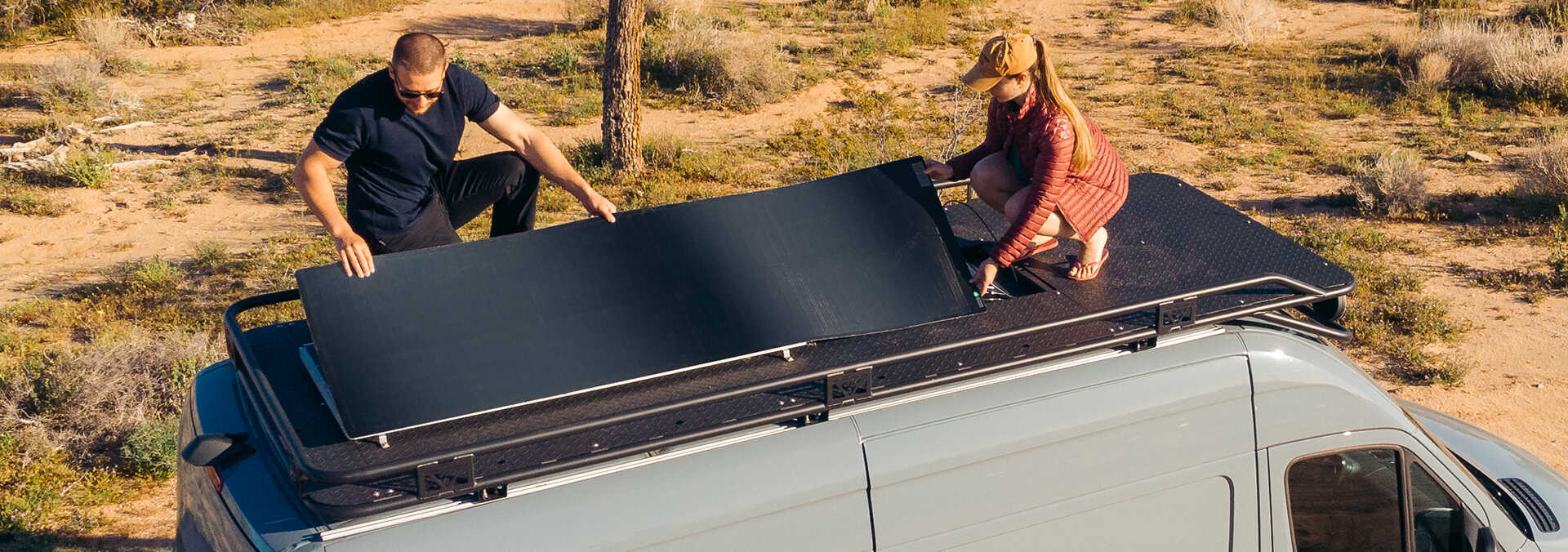
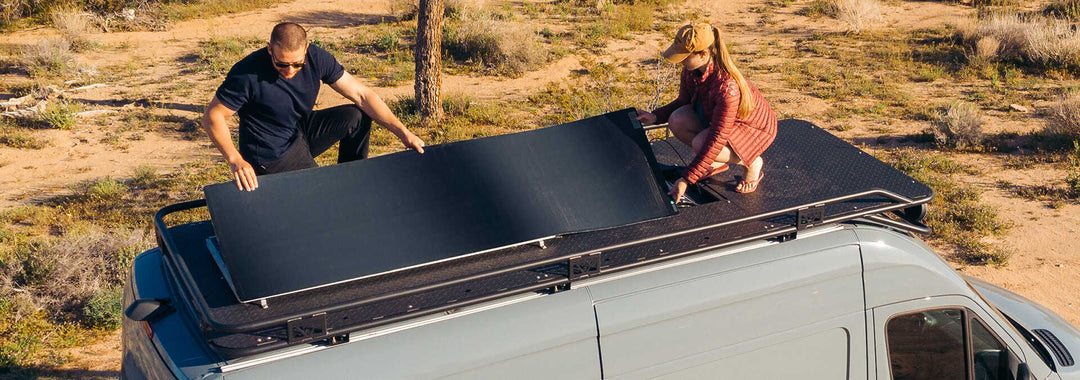
Solar Panel for RV & Van Life
Stay off-grid longer with high-efficiency solar panels designed for RVs, camper vans, and overlanding setups. Power your fridge, lights, coffee maker, and portable electronics wherever the road takes you — without relying on noisy generators or campground hookups.

Solar Panel for Camping
Whether you’re camping, tailgating, fishing, traveling, or working outdoors, BougeRV portable solar panels provide convenient charging for phones, laptops, cameras, and portable power stations — giving you energy anytime, anywhere. Lightweight and easy to set up, they’re perfect for tents, SUVs, and outdoor living.

Solar Panel for Home Backup
Prepare for unexpected outages with dependable solar charging solutions. BougeRV rigid solar panels help keep essential devices powered during emergencies, hurricanes, blackouts, and severe weather conditions, offering extra peace of mind at home.

Solar Panel for Boating & Marine
Built with durable, weather-resistant materials, BougeRV flexible solar panels are ideal for boats, yachts, and marine environments. Maintain battery power for navigation systems, lighting, refrigerators, and onboard electronics while out on the water.

Solar Panel for Off-Grid Cabins
Generate reliable renewable energy for cabins, sheds, farms, and remote job sites. BougeRV high-wattage solar panels help power tools, batteries, security systems, and outdoor equipment in places where traditional electricity is unavailable.
Solar Panel Guides

How to Choose a Perfect Solar Panel
Looking to harness solar energy but not sure which panel to pick? This guide breaks down everything you need to know about choosing the perfect solar panel for your needs—whether you're powering an RV, cabin, or off-grid setup. From wattage and efficiency to portability and installation tips, BougeRV walks you through the key factors so you can make a smart, confident decision.

Want to keep your solar panels performing at their best? This comprehensive maintenance guide from BougeRV covers everything you need to know—from cleaning tips to inspection checklists. Learn how to extend the life of your panels and maximize energy output with simple, effective upkeep.
Learn more about Solar Panels
Solar panels are made of photovoltaic (PV) cells, usually silicon-based, that convert sunlight into direct current (DC) electricity. When sunlight hits the cells, it excites electrons, creating an electric flow. This DC electricity can be used directly, stored in batteries, or converted to alternating current (AC) with an inverter for home or RV use.
BougeRV offers several solar panel types designed for different power needs and environments:
- CIGS Thin-Film Solar Panels – Lightweight, flexible panels that can bend to fit curved surfaces like RV roofs, vans, and boats. They perform well in high temperatures and low-light conditions.
- TOPCon N-Type Solar Panels – High-efficiency rigid panels using advanced cell technology for stronger power output, better low-light performance, and long-term reliability.
- Anti-Shading Solar Panels – Designed with bypass diode technology to reduce power loss when part of the panel is shaded by trees, buildings, or other obstacles.
- Bifacial Solar Panels – Capture sunlight from both the front and back sides, increasing total energy generation, especially on reflective surfaces like sand or snow.
- Portable Solar Panels – Foldable, easy-to-carry panels ideal for camping, RV trips, and emergency backup power, offering plug-and-play convenience.
Learn more about the BougeRV solar panel comparison.
To calculate how many solar panels you need for your RV, start by estimating your daily power usage in watt-hours (Wh)—add up the wattage of all appliances and multiply by the hours you use them each day. Then divide that total by the daily output of a solar panel. For example, a 100W solar panel can produce about 400–500Wh per day in good sunlight. So if your RV uses around 1,200Wh per day, you’d need 2–3 panels. Don’t forget to factor in battery capacity and weather conditions for a reliable off-grid setup. Read our blog: How Many Solar Panels Do I Need.
The power output depends on the panel’s wattage and sunlight exposure. For example, a 100-watt panel under ideal conditions (about 5 peak sun hours per day) can produce approximately 500 watt-hours (0.5 kWh) daily. Real-world output varies with weather, location, shading, and panel angle.
Absolutely! We offer a range of solar panels specifically designed for RVs and other recreational vehicles. These solar panels are lightweight, durable, and capable of harnessing solar energy to power various appliances and accessories onboard. With our RV solar panels, you can enjoy off-grid adventures without worrying about running out of power.
For camping, the size of the solar panel you need depends on your daily power needs—such as charging phones, lights, or a portable fridge. A 100W to 200W portable solar panel from BougeRV, is ideal for most campers.
A 100W panel can typically generate around 400–500Wh per day in full sun, enough to power small devices or keep a 12V battery charged. If you're using higher-draw equipment or camping off-grid for several days, consider a 200W panel or a solar kit with a charge controller and battery storage for more reliable energy.
Absolutely! Solar panels are a versatile and efficient solution for both residential and commercial properties. BougeRV offers a range of high-quality solar panels suitable for home rooftops, small businesses, and larger commercial installations. By installing solar panels, you can reduce electricity bills, increase energy independence, and lower your carbon footprint.
The cost of a solar panel generally ranges from $80 to $500 or more per panel, depending on factors like wattage, efficiency, type, and intended use.
For example, a 100W panel might cost around $80–$150, while a 400W high-efficiency monocrystalline panel can cost $250–$500. On a per-watt basis, prices typically fall between $0.60 and $1.50, with monocrystalline panels (more efficient and compact) costing more than polycrystalline or thin-film panels.
RV solar panels typically cost between $100 and $500 per panel, depending on their wattage, portability, and features.
12V solar panels are commonly used for charging batteries in various applications, including boats, RVs, and off-grid systems. If you have a 12V battery system or need to power 12V devices, our 12V solar panels are an ideal choice. We also provide 24V solar panels for high voltage system.
Solar panels are designed to be durable and long-lasting. Most high-quality solar panels come with warranties ranging from 25 to 30 years, guaranteeing their performance over an extended period. With proper maintenance and regular cleaning, solar panels can continue to generate electricity well beyond their warranty period.
Yes, solar panels generate electricity from diffuse sunlight, not just direct rays. However, output drops significantly—often to 10–25% of full capacity. That’s why battery storage or a backup power source is important for consistent energy availability.


