




Powered Cooler Guide: How to Choose the Best One for Your Adventures

A powered cooler is a portable cooling device that uses electricity to keep food and drinks cold without relying on ice as its primary cooling method. Depending on the model, it can run on a 12V vehicle outlet, a household AC outlet, or a compatible battery or power station. Some setups can also use solar panels to recharge a compatible power source.
Powered coolers are popular for camping, road trips, RV travel, overlanding, and other outdoor activities. Unlike traditional ice coolers, compressor-powered models can provide adjustable temperatures for refrigeration or freezing. BougeRV offers a range of electric coolers with options for different capacities, cooling zones, and power configurations. Understanding how a powered cooler works and which features matter most can help you choose the right model for your next trip.
How Does a Powered Cooler Work?
Most electric powered coolers use either compressor cooling or thermoelectric cooling.
- Compressor-powered coolers work similarly to household refrigerators. A compressor circulates refrigerant through a cooling system to remove heat from the interior. Many portable compressor refrigerators can maintain low temperatures even in warm environments, and some models can freeze food. They are well suited to extended camping trips, RV travel, and long-distance driving.
- Thermoelectric coolers use electricity to transfer heat from inside the unit to the outside. They are generally better suited to keeping contents cooler than the surrounding air rather than providing the deep-cooling performance of a compressor refrigerator.
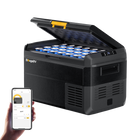
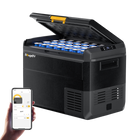
BougeRV’s portable electric refrigerator lineup includes compressor-powered models designed for refrigeration and freezing. For example, the BougeRV CRX3 30QT portable electric cooler offers adjustable temperature settings from -4°F to 68°F, making it suitable for chilling drinks, storing fresh food, or freezing items when needed.
Powered Cooler vs. Traditional Ice Cooler
The biggest difference between a powered cooler and a traditional ice cooler is the cooling method. A traditional cooler relies on ice or ice packs, while a powered cooler uses an electrical cooling system.
| Feature | Powered Cooler | Traditional Ice Cooler |
|---|---|---|
| Cooling method | Electric cooling system | Ice or ice packs |
| Electricity | Requires a compatible power source | Not required |
| Temperature control | Adjustable on many models | Depends on ice and insulation |
| Ice replacement | Not normally needed | Required as ice melts |
| Best uses | Road trips, camping, RVs, and longer outdoor stays | Picnics, beach trips, and short outings |
A traditional ice cooler can be a simple, convenient choice for a short outing without access to electricity. A powered cooler is often more practical for longer trips when you want consistent cooling without repeatedly replenishing ice.
The right choice depends on trip length, available power, storage needs, and budget. If you travel frequently or need to keep food frozen, a compressor-powered cooler may offer more flexibility.
Types of Powered Coolers: 12V, AC, Battery, and Solar
Powered coolers differ in how they receive electricity. Choosing a compatible power setup is especially important if you plan to use your cooler in a vehicle or away from traditional electrical outlets.
12V Powered Coolers
A 12V powered cooler can connect to a compatible vehicle outlet or another suitable 12V DC supply. This makes it a popular option for road trips, car camping, truck travel, and RV adventures.
BougeRV offers several 12V portable cooler series, including the CRX3, Rocky, and CRD2. The compact CRX3 is suited to everyday vehicle use and camping, while the larger Rocky and CRD2 models offer more storage space, with dual-zone options available in their respective ranges.
Before choosing a 12V cooler, check its voltage requirements, connector type, current draw, and your vehicle’s power limitations. Some vehicle outlets stop supplying power when the engine is off, while prolonged use can drain a starter battery. A suitable auxiliary battery can help provide power when the vehicle is parked.

AC-Powered Coolers
AC power is useful when you have access to a compatible household outlet or powered campsite. Most BougeRV portable refrigerators support both AC and DC inputs, allowing you to use the same unit at home, in a vehicle, or at a campsite.
The BougeRV CRX3 supports DC12V/24V and AC100–240V input, providing flexibility for different environments. Always confirm the supported voltage and included accessories for your selected model.
Battery-Powered Coolers
A battery-powered cooler may include a built-in or detachable battery, or it may operate from a compatible external battery or power station. This setup is useful when you need cooling away from a vehicle outlet or wall socket. However, not every powered cooler comes with a battery. Some models require an external power source, while others offer battery-compatible configurations.
For example, the BougeRV CRX3 30QT is available in different configurations, including a fridge-only option and an option with a 240Wh battery. Check the CRX3 product page to compare available configurations before purchasing.
Actual runtime depends on battery capacity, temperature settings, ambient temperature, ventilation, and how frequently the lid is opened. For overnight camping or longer off-grid trips, estimate your energy needs rather than relying on a single advertised runtime.
Solar-Powered Cooling Setups
A solar-powered cooling setup typically combines an electric cooler with compatible solar panels and a battery or power station. Solar panels generate electricity in suitable sunlight, while a battery can store energy for use after sunset or when sunlight is limited.
Selected BougeRV CRX3 configurations are offered with compatible 100W or 200W solar kits. These options can be useful for camping and other outdoor activities where access to conventional electricity is limited.
Keep in mind that solar panels do not automatically make every powered cooler solar-compatible. Check the cooler’s input specifications, the solar charging equipment, and the battery or power station requirements. Shading, cloud cover, season, and panel placement all affect available solar energy.

How to Choose the Right BougeRV Powered Cooler
The best powered cooler depends on how much you need to store, where you plan to use it, and which power sources are available.
- For road trips and everyday car use: The BougeRV CRX3 23QT and 30QT models offer compact options for keeping food and drinks cold while traveling. Their compressor cooling and multiple power options make them worth considering for drivers who want more control than a traditional ice cooler provides.
- For family camping and extended trips: The BougeRV Rocky series includes larger 41QT, 55QT, 69QT, and 81QT options. Selected models feature dual-zone cooling, allowing separate compartments to be managed for different food-storage needs.
- For organized refrigerated and frozen storage: The BougeRV CRD2 series includes 43QT, 52QT, and 61QT dual-zone portable refrigerators. These larger models can be useful when you want to keep fresh ingredients and frozen food separate during longer adventures.
- For compact travel: Smaller options such as the BougeRV CRH 9QT and CRH20 21QT are worth considering when portability and limited vehicle space matter more than maximum capacity.
Before buying, compare capacity, dimensions, cooling zones, temperature range, power compatibility, and battery options. Battery and solar availability can vary by model and configuration, so confirm the current product specifications. Explore the full range of BougeRV Electric Coolers to compare models for your travel needs.
Frequently Asked Questions
1. Does a powered cooler need ice?
No. A powered cooler uses electricity for cooling and generally does not need ice to operate. Its performance depends on the cooling technology and the available power source.
2. Can a powered cooler run without a wall outlet?
Yes, if it supports another compatible power source. Depending on the model, it may run from a 12V vehicle outlet, a suitable external battery, or a portable power station. Battery operation is not a standard feature of every powered cooler.
3. Can a powered cooler freeze food?
Some can. Compressor-powered portable refrigerators, including suitable BougeRV models, can operate at freezer temperatures. Check the temperature range of the exact model before using it to store frozen food.
4. How long can a battery-powered cooler run?
Runtime depends on battery capacity, energy consumption, temperature settings, ambient conditions, and usage. Check the manufacturer's specifications and treat estimated runtime as a guide rather than a guarantee.
5. Can I use a powered cooler for camping?
Yes. Powered coolers are useful for camping when you have a compatible vehicle outlet, battery, power station, or suitable solar charging setup. For longer off-grid trips, plan your energy supply before leaving.
6. Is a powered cooler better than a regular cooler?
Neither is best for every situation. A powered cooler provides active cooling without routine ice replacement but needs electricity. A traditional cooler is simpler and works without power. Choose according to your trip length, cooling requirements, and access to electricity.
Find the Right Powered Cooler for Your Next Adventure
A powered cooler provides a convenient way to keep food and drinks cold without depending on melting ice. Whether you need a compact 12V portable refrigerator for road trips, a larger dual-zone cooler for family camping, or a battery-compatible setup for off-grid travel, the right choice depends on capacity, cooling performance, and power requirements.
BougeRV offers a variety of portable electric coolers for cars, camping, RVs, and overlanding. Explore BougeRV Electric Coolers to compare available models and find a powered cooler that fits your next trip. Use the limited-time discount code "SEOCT6" at checkout to enjoy an extra 6% off your entire order on all BougeRV products.


