


Find Your Ideal BougeRV Solar Panel
Find Your Ideal BougeRV Solar Panel
Power Station for Outdoor Appliance
view all >Solar Panel for Fridge
view all >Fridge Cover
view all >Others
view all >
Electric Utility Carts & Wagons
view all >Coffee Maker
view all >🔥 ShadePower Series
view all >Rigid Solar Panels
view all >All Flexible Solar Panels
view all >Flexible Fiberglass Solar Panel
view all >Portable Solar Panels
view all >
Rigid Solar Kits
view all >Arch Pro Solar Kits
view all >CIGS Solar Kits
view all >Flexible Solar Kits
view all >
Marine Solar Systems
view all >
Solar Controller
view all >Lithium Batteries
view all >Cables & Connectors
view all >Mounts & Brackets
view all >Accessories & Tools
view all >

CRX3 Series
View All >CRD2 Series
View All >Rocky Series
View All >E Series
View All >
Power Station for Outdoor Appliance
View All >Solar Panel for Fridge
View All >Fridge Cover
View All >Others
View All >
All 12V Fridges >>
View All > Nuevo
CRX3 23QT
Nuevo
CRX3 23QT
 Nuevo
CRX3 30QT
Nuevo
CRX3 30QT
 Nuevo
CRX3 23QT con batería
Nuevo
CRX3 23QT con batería
 Nuevo
CRX3 30QT con batería
Nuevo
CRX3 30QT con batería
 Nuevo
Rocky V3.0 41QT
Nuevo
Rocky V3.0 41QT
 Nuevo
Rocky v3.0 55QT
Nuevo
Rocky v3.0 55QT
 Nuevo
Rocky V3.0 69QT
Nuevo
Rocky V3.0 69QT
 Nuevo
Rocky V3.0 81QT
Nuevo
Rocky V3.0 81QT
 CR 30QT Blanco
 CR 30QT Negro
 CR 23QT Blanco
 CR 23QT Negro
 Morado Colorido 23QT
 Rosa colorido 23QT
 Verde menta colorido 23QT
 CRH 9QT
 CRH 9QT + Batería
 Nuevo
CRH 21QT
Nuevo
CRH 21QT
 Nuevo
CRH 21QT con batería
Nuevo
CRH 21QT con batería
 Nuevo
CRD2 V2.0 43QT
Nuevo
CRD2 V2.0 43QT
 Nuevo
CRD2 V2.0 52QT
Nuevo
CRD2 V2.0 52QT
 Nuevo
CRD2 V2.0 61QT
Nuevo
CRD2 V2.0 61QT
 Nuevo
CRD2 V2.0 43QT
Nuevo
CRD2 V2.0 43QT
 Nuevo
CRD2 V2.0 52QT
Nuevo
CRD2 V2.0 52QT
 Nuevo
CRD2 V2.0 61QT
Nuevo
CRD2 V2.0 61QT
 CRPRO 21QT Negro
 CRPRO 30QT Negro
 CRPRO 21QT Blanco
 CRPRO 30QT Blanco
 CRPRO VIP Actualizado 30QT
 Serie E 42QT
 E Series 53CUARTOS
 Nuevo
ASPEN S50 sin ruedas
Nuevo
ASPEN S50 sin ruedas
 Nuevo
ASPEN S50 con ruedas
Nuevo
ASPEN S50 con ruedas
 Nuevo
ASPEN S50 Sin ruedas con batería
Nuevo
ASPEN S50 Sin ruedas con batería
 Nuevo
ASPEN S50 con ruedas y batería
Nuevo
ASPEN S50 con ruedas y batería
 Nuevo
CRS 79QT Dual Zone
Nuevo
CRS 79QT Dual Zone
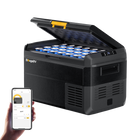 CRS 42QT
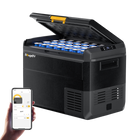 RSC 53QT
 CRS 42QT (Versión con ruedas)
 CRS 53QT (versión con ruedas)
 CRS 63TB
 Nuevo
Rocky V3.0 41QT con batería
Nuevo
Rocky V3.0 41QT con batería
 Nuevo
Rocky V3.0 55QT con batería
Nuevo
Rocky V3.0 55QT con batería
 Nuevo
Rocky V3.0 69QT con batería
Nuevo
Rocky V3.0 69QT con batería
 Nuevo
Rocky V3.0 81QT con Batería
Nuevo
Rocky V3.0 81QT con Batería
 Nuevo
Batería extraíble de 240 Wh
Nuevo
Batería extraíble de 240 Wh
 Estación de energía de 266Wh
 Batería extraíble de 173 Wh
 JuiceGo (onda sinusoidal pura)
Camping Lantern
View All > Luz de camping portátil T1
 Linterna portátil para camping T1 (verde)
 Luz de camping portátil T1 (plateada)
 Lámpara de camping portátil T1 (azul)
 Luz de área telescópica
 Luz de camping CL04
 Linterna Magnética para Acampar
 Luz de área móvil verde
 Luz de área móvil negra
 Foco de área (paquete de 2)
 Linterna de camping con zoom
 Lámpara de camping BougeRV Easy Carry Clip-On para exteriores
 BougeRV WL01 Luz de trabajo recargable con rotación de 180° para obra
Electric Utility Carts & Wagons
View All >Truck Bed Tent
View All >Air Mattress
View All >Speaker Pods
View All >Golf Cart
View All >🔥 ShadePower Series
View All >Rigid Solar Panels
View All >All Flexible Solar Panels
View All >Flexible Fiberglass Solar Panel
View All >Portable Solar Panels
View All >
0-100W Solar Panels
View All >200W Solar Panels
View All >High Wattage Solar Panels
View All >
Rigid Solar Kits
View All >Arch Pro Solar Kits
View All >CIGS Solar Kits
View All >Flexible Solar Kits
View All >
Marine Solar Systems
View All >
Solar Controller
View All >Lithium Batteries
View All >Cables & Connectors
View All >Mounts & Brackets
View All >Accessories & Tools
View All >
All Solar Panels>>
View All > ShadePower Arch Pro 200W
ShadePower Arch Pro 100W
ShadePower Arch Pro 200W
ShadePower Arch Pro 100W
 TOPCon Arch 2.0 200W
TOPCon Arch 2.0 100W
TOPCon Arch 2.0 200W
TOPCon Arch 2.0 100W
 Arco 200W
 Arco 100W
 ShadePower Yuma 200W (Adhesivo)
 ShadePower Yuma 200W (Perforado)
 ShadePower Yuma 100W (Adhesivo)
 ShadePower Yuma 100W (Adhesivo-Largo)
 ShadePower Yuma 100w (Perforado)
 ShadePower Rígido 200W
 TOPCon Rígido de 200W
 TOPCon Rígido de 300W
 TOPCon Rígido 400W
 Mono 400W
 800W 10BB
 Mono 300W
 600W 12BB
 TOPCon 100W
 Panel solar portátil de 50W
 Panel solar portátil de 100 W
 Panel solar plegable de 100W
 Panel solar plegable de 200W
 Toldo bimini solar TopCon de 200W


Choose your setup and discover the panel types that fit your space, installation, and outdoor needs
Flexible and reliable options for mobile outdoor power.
Compare BougeRV’s solar panel technologies by efficiency, flexibility, shade performance, weight, and installation. From flexible CIGS to high-efficiency TOPCon and shade-optimized panels, find the technology that best fits your setup.
Tell us what you use every day and we'll estimate the solar capacity that fits your setup.
Explore the right panels, components, and complete solar kits to power your setup.
BougeRV offers several solar panel types designed for different power needs and environments:
To calculate how many solar panels you need for your RV, start by estimating your daily power usage in watt-hours (Wh)—add up the wattage of all appliances and multiply by the hours you use them each day. Then divide that total by the daily output of a solar panel. For example, a 100W solar panel can produce about 400–500Wh per day in good sunlight. So if your RV uses around 1,200Wh per day, you’d need 2–3 panels. Don’t forget to factor in battery capacity and weatherconditions for a reliable off-grid setup.
The power output depends on the panel’s wattage and sunlight exposure. For example, a 100-watt panel under ideal conditions (about 5 peak sun hours per day) can produce approximately 500 watt-hours (0.5 kWh) daily. Real-world output varies with weather, location, shading, and panel angle.
For camping, the size of the solar panel you need depends on your daily power needs—such as charging phones, lights, or a portable fridge. A 100W to 200W portable solar panel from BougeRV, is ideal for most campers.
A 100W panel can typically generate around 400–500Wh per day in full sun, enough to power small devices or keep a 12V battery charged. If you're using higher-draw equipment or camping off-grid for several days, consider a 200W panel or a solar kit with a charge controller and battery storage for more reliable energy.
12V solar panels are commonly used for charging batteries in various applications, including boats, RVs, and off-grid systems. If you have a 12V battery system or need to power 12V devices, our 12V solar panels are an ideal choice. We also provide24V solar panels for high voltage system.
Yes, the BougeRV Arch Pro 200W solar panel is compatible with both 12V and 24V battery systems, making it versatile for various applications, including RVs, boats, and off-grid homes.
Shading—whether caused by leaves, bird droppings, or surrounding objects—can significantly reduce the output of traditional solar panels, in some cases even driving power generation close to zero.
BougeRV solar panels across three series (ArchPro, CIGS Flexible, and 200W ShadePower solar panel) are equipped with multiple bypass diodes. These diodes help redirect current around shaded cells, minimizing energy loss and effectively preventing hotspot formation.
As a result, even under partial shading conditions, the system can still maintain up to 85% of its output performance, whereas conventional solar panels often fail to generate meaningful power under similar conditions.


