




Filtrar
Paneles solares para autocaravanas
Paneles solares para autocaravanas
¿Listo para desconectarte de la red y explorar sin límites? Los paneles solares para vehículos recreativos BougeRV están diseñados para la vida en la carretera: duraderos, eficientes y hechos para rendir en cualquier aventura. Ya sea que estés acampando en la naturaleza o viajando por todo el país, nuestros paneles solares de alta eficiencia mantienen tu vehículo recreativo encendido con energía limpia y renovable. Elige entre opciones flexibles, rígidas y plegables para adaptarse a tu configuración.
¿Listo para desconectarte de la red y explorar sin límites? Los paneles solares para vehículos recreativos BougeRV están diseñados para la vida en la carretera: duraderos, eficientes y hechos para rendir en cualquier aventura. Ya sea que estés acampando en la naturaleza o viajando por todo el país, nuestros paneles solares de alta eficiencia mantienen tu vehículo recreativo encendido con energía limpia y renovable. Elige entre opciones flexibles, rígidas y plegables para adaptarse a tu configuración.
Read more
»
Fold up
»




How Do RV Solar Panels Work?

RV solar panels harness sunlight and convert it into electricity to power your RV. They generate direct current (DC) power, which is then regulated by a charge controller to safely charge your RV’s battery bank. To run standard appliances, an inverter converts the stored DC power into alternating current (AC).A typical RV solar setup includes solar panels, a charge controller, an inverter, and deep-cycle batteries. Together, these components create a reliable and renewable power source—perfect for off-grid adventures and extended camping trips.
Best Solar Panels for RVs
At BougeRV, we're constantly expanding our RV solar panel lineup to meet every adventurer’s needs. From CIGS solar panels to flexible and rigid monocrystalline options, we’ve engineered reliable solutions to keep your RV powered—wherever the road takes you.

Arch Pro Flexible Solar Panels for RVs
Power your RV adventures with BougeRV Arch Pro Flexible Solar Panels. They feature 25% conversion efficiency, flexible construction for curved RV roofs, and ShadePower technology that can maintain up to 130W output under 33% partial shading. Compatible with 12V and 24V systems.
CIGS Flexible Solar Panels for RVs
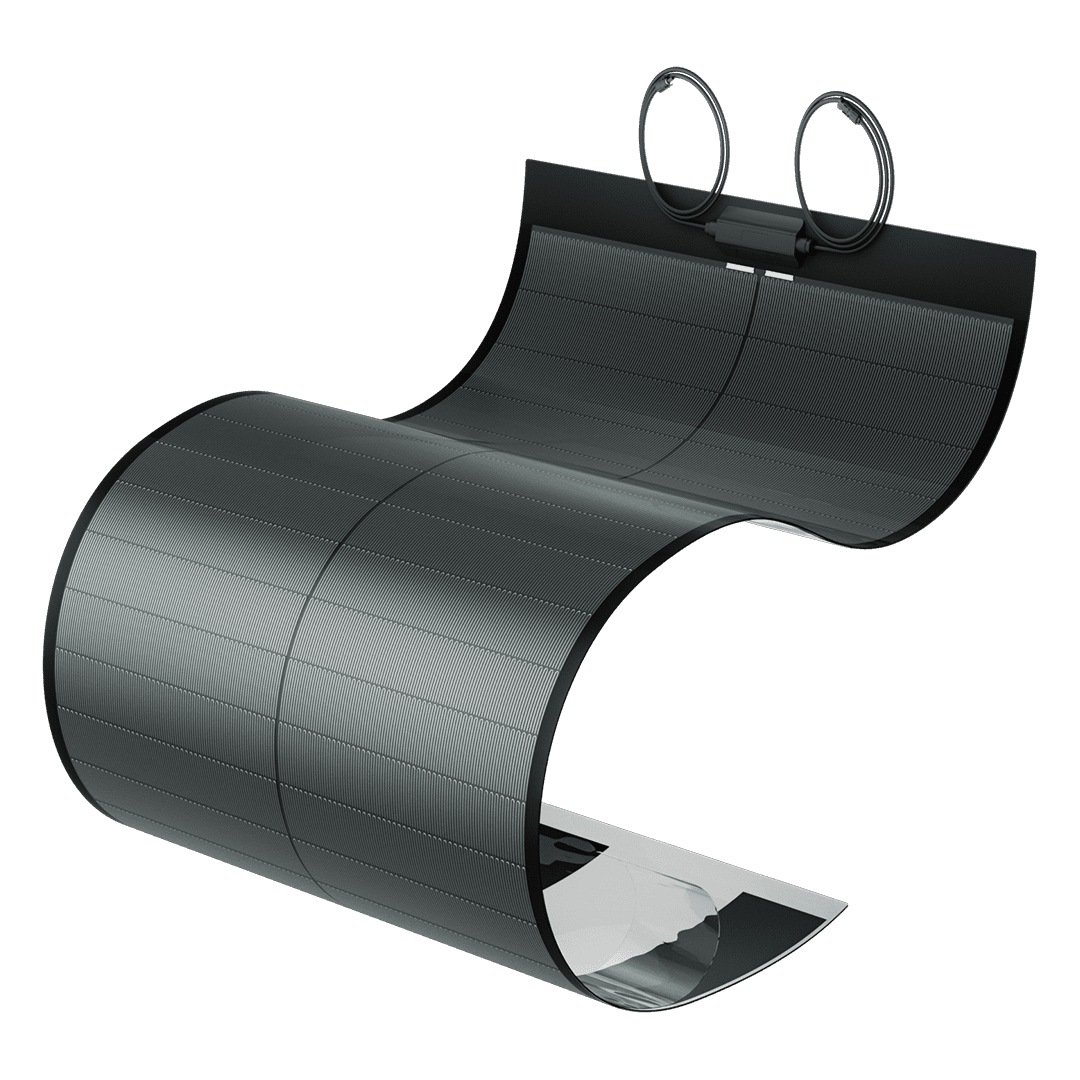
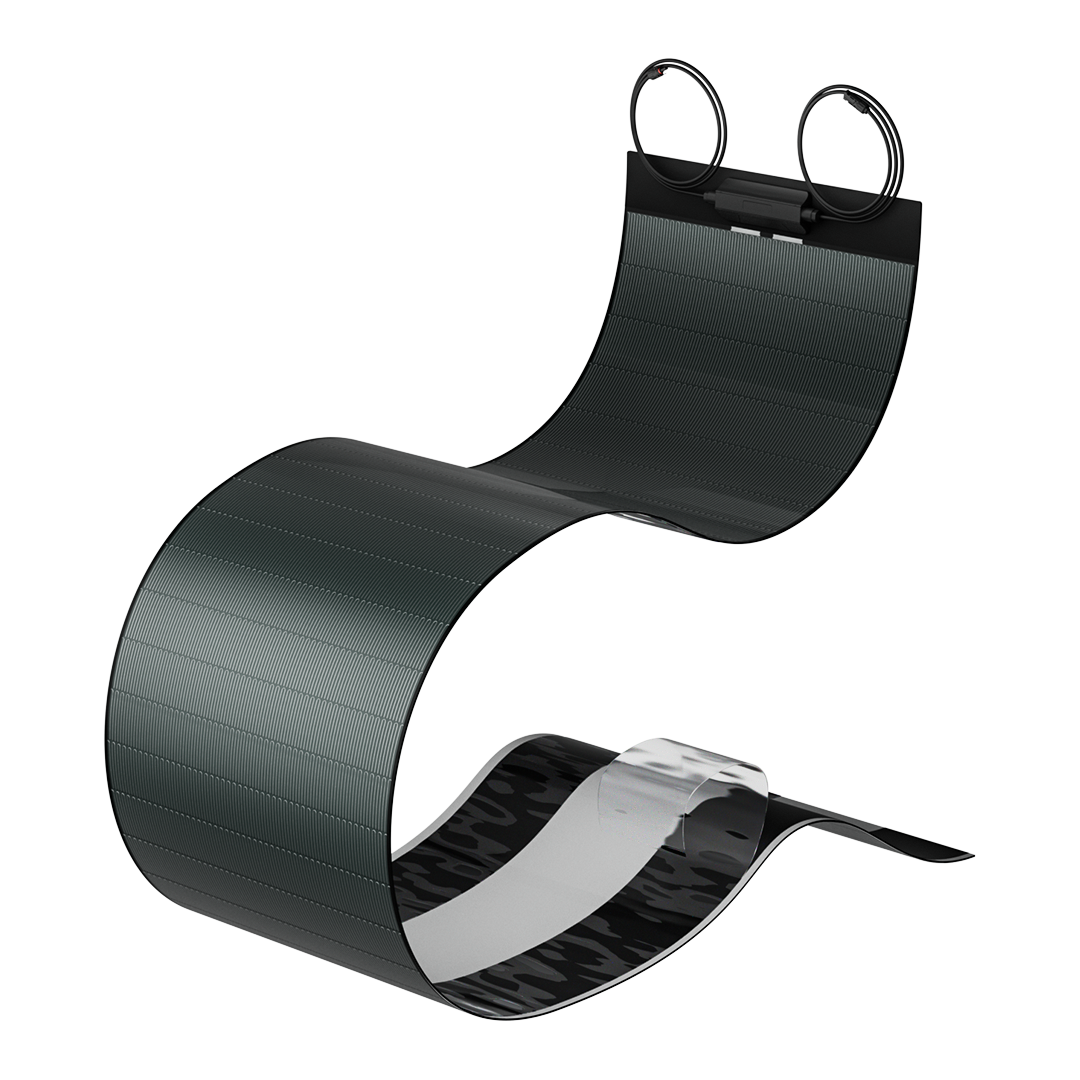
BougeRV Yuma CIGS solar panels feature a flexible, 360° bendable design that effortlessly conforms to curved RV roofs and uneven surfaces. Engineered for performance in partial shade, these panels deliver reliable power without the need for drilling—making installation quick, clean, and hassle-free.

Flexible RV Solar Panels
With a design that is both flexible and 360° bendable, BougeRV's Yuma CIGS solar panels adapt seamlessly to curved RV roofs and surfaces. These panels perform efficiently even in shaded conditions and can require no drilling for installation.

Rigid Bifacial Solar Panels for RVs
BougeRV’s mono-facial and bifacial monocrystalline solar panels offer top-tier efficiency in direct sunlight, making them ideal for RV rooftops. Whether you’re looking for a permanent or semi-permanent setup, these durable panels provide reliable, high-performance power on the road.
Why Choose BougeRV RV Solar Panels?
BougeRV offers a range of high-efficiency, lightweight solar panels for RVs. Designed with advanced technology, our robust and versatile solar panels can efficiently power your RV and RV appliances.
★ 100% Reliable
Waterproof;
-40℉~+185℉
★ For All RV Styles
All-black or classic design
★ 12-Year Product Warranty
Quality design
★ Up to 25 Years
We stand by our solar panels
High-Efficiency Solar Panels for RVs
BougeRV offers some of the most efficient solar panels for RVs, designed with advanced CIGS and monocrystalline cells to deliver reliable power in both sunny and cloudy conditions. Engineered for performance and durability, our RV solar panels maximize energy capture wherever your journey takes you.
• CIGS / Monocrystalline Solar Cells
• Up to 23% Conversion Efficiency

Lightweight Solar Panels for RVs
BougeRV offers specially designed lightweight RV solar panels. These panels utilize lightweight aluminum frames or CIGS thin film solar cells, making them a portable choice, especially if you travel often.
• Aluminum Frames/Frameless
• Compact Size

Various Sizes for Different Needs
Meet your specific space and electricity needs with various RV solar panel sizes. Whether the popular 100W and 200W solar panels for your RV, or the high-wattage 400W solar panel kit, we've got you covered. Our solar panels allow you to highly customize your RV's solar system.

Setup Instantly and Easy to Use
Our foldable RV solar panels and flexible Yuma CIGS solar panels can be set up quickly, and transported and stored conveniently, making them the best on-the-go power source.
• Installation with/without mounting brackets
• Foldable/Bendable

Power Any Type of Your RV
BougeRV's off-grid RV solar panels are crafted for:
• Class A RV, Class B RV, Class C RV
• RV campers, RV trailers/travel trailers
• Motorhomes, campervans, fifth-wheel trailers
• Popup campers, truck campers, etc.
Power Your RV Appliances
The following RV appliances can be powered by our solar panels:
• RV refrigerator
• RV air conditioner
• Charge a generator for an RV, ect.
Solar Panels Comparison

Flexible vs. Rigid Solar Panels
Flexible solar panels for RVs are lightweight, flexible, and easy to mount to fit curved surfaces. They're perfect for those who have limited space. Made with crack-resistant CIGS solar cells, our flexible solar panels can even bend up to 360°, allowing them to withstand the rough conditions of your RV's terrain. On the other hand, rigid solar panels are typically more efficient. With strong frames and protective glass, they last longer. They are also better suited for high heat conditions.
Monocrystalline vs. Polycrystalline Solar Panels
Monocrystalline solar panels are more efficient than Polycrystalline panels, as they convert more sunlight into power. This makes them ideal for RVs with limited roof space. However, they come with a higher initial cost. On the other hand, Polycrystalline panels are a more budget-friendly option but offer lower efficiency. Hence, if your primary focus is efficiency, you may prefer Monocrystalline panels instead of Polycrystalline ones.
Generator vs. Solar Panels for RVs
Generators provide reliable power, but they can be noisy, reliant on fuel, and aren't the most eco-friendly option. Alternatively, solar panels for RVs present a quiet, sustainable energy solution that's free once installed. They need little maintenance and work well in sunny locations, though their efficiency might decrease on cloudy days. While the upfront expense for solar panels can be high, they could end up saving you money in the long run.
How Many Watt Solar Panels Do I Need for RV?

An RV typically uses less than 200 kWh per month. Let's say your RV consumes 180kWh monthly and gets 5 peak sun hours daily; you would need six 200W solar panels or another combination that meets the energy need. For cloudy days, we suggest opting for a higher-efficiency solar array.
| RV power consumption | 100W solar panels for RV | 200W solar panels for RV | 300W solar panels for RV | 400W solar panels for RV |
|---|---|---|---|---|
| 30 kWh/month | 2 | 1 | 1 | / |
| 60 kWh/month | 4 | 2 | 2 | 1 |
| 120 kWh/month | 8 | 4 | 3 | 2 |
| 180 kWh/month | / | 6 | 4 | 3 |
Tips on Mounting Solar Panels on RV
Mounting Mono Solar Panels for RV

Monocrystalline solar panels are positioned on the roof of your RV to harness power for its battery bank. To best capture sunlight, these panels can be either installed flat on the RV's metal roof or tilted using solar panel mounting brackets.
Flexible Solar Panel Installation

Attaching flexible solar panels on rv roof needs no drilling and brackets thanks to their adhesive tapes. Their flexibility allows them to be mounted onto RVs or RV trailers with curved surfaces. By installing flexible solar panels, you can also reduce installation costs.


